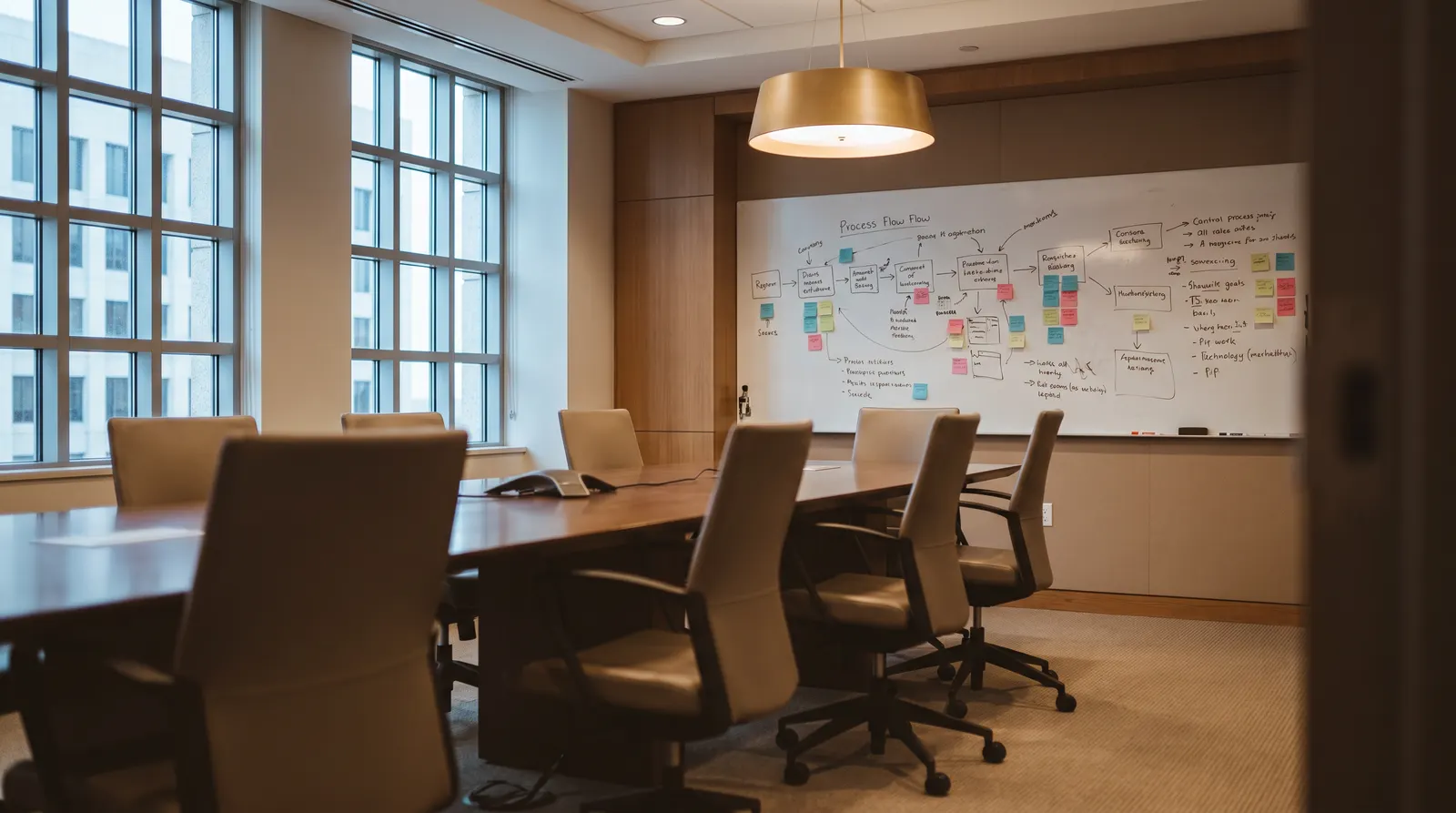
Most people expect change to feel like change. They imagine a clear before and after, a moment where the old way gives way to the new. What they get instead is months of meetings, miscommunication, and incremental progress that barely registers on a day-to-day basis. It can feel like nothing is working. Usually, everything is.
The trouble is that real transformation requires three things to shift at once, and each one moves at a different speed:
- Processes — the easiest to document, and the hardest to actually change once people have muscle memory built around the old way.
- Technology — needs configuring, integrating, testing, and retesting, and no system survives contact with reality without adjustments nobody budgeted time for.
- Culture — the slowest of the three. It shifts only through repetition and through leadership behaving consistently with the stated values, over and over, for a long time.
Together, these three create a pace that can look, from the outside, like stalling. Processes are the easiest to document and the hardest to change. People have muscle memory built around the old way. Even when they understand the new approach intellectually, their instinct is to fall back on what they know when things get busy or stressful. That is not resistance. That is just being human.
How to lead through the slow middle
A go-live date changes a system. It does not change a habit.
So progress tends to feel invisible for a while. Teams are learning. Systems are stabilizing. Habits are forming beneath the surface. And then something clicks. A team hits a milestone that felt impossible six months ago. A process that used to take three days takes three hours. People stop asking how the old system worked because they have genuinely stopped thinking about it.
As a director running programs like this, the hardest discipline is resisting the urge to manufacture a feeling of speed. It is tempting to add a dashboard, a new status color, a fresh set of metrics, just so the pace looks faster than it feels. None of that changes the underlying math. Three systems have to shift together, and none of them shift on command. It is the same discipline behind asking a partner what their picture of success looks like before handing them a plan — slowing down on purpose, in the moment it is least comfortable to do so.
What actually helps is naming the slowness out loud, early, before anyone starts to panic about it. Tell the team and the stakeholders: this will feel slower than it is. Explain why. Then keep pointing at the small, real signs of movement instead of waiting for one big moment that proves the change worked. Those moments rarely arrive on schedule. The quieter evidence is there the whole time, if you know where to look — often in the same unglamorous places a team’s process gaps turn out to hide it.
That is the shape of meaningful change. Getting the story right when you have to explain that pace to leadership is its own skill, one worth as much attention as the change itself.
More essays like this one live on the Between Mondays articles page.
Further reading: McKinsey on organizational transformation and the Project Management Institute both cover the mechanics of large-scale change in more depth.